Yaseen Taha joined out of curiosity. He graduated with a company.
Yaseen Taha's family had come a long way to see him. They didn't get the visit they planned.
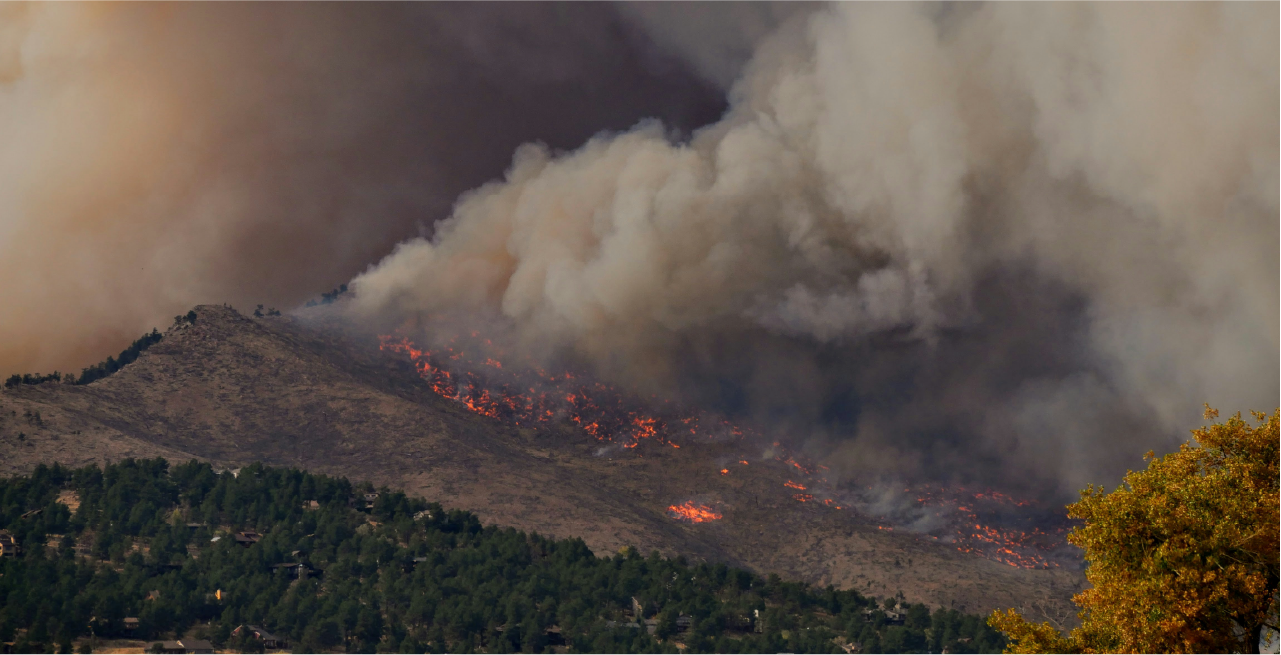
"All we see is red skies and smoke so thick that you can't really see ahead," he said. "That special family visit had to be cut short."
He's an international student at the University of Maryland, so he doesn't see his family often. A wildfire hundreds of miles away took days off the time he had with them. That's a strange and specific way to learn that a global problem is also a personal one.
He joined xFoundry's team for the XPRIZE Wildfire Competition with no solution of his own.
Team Crossfire
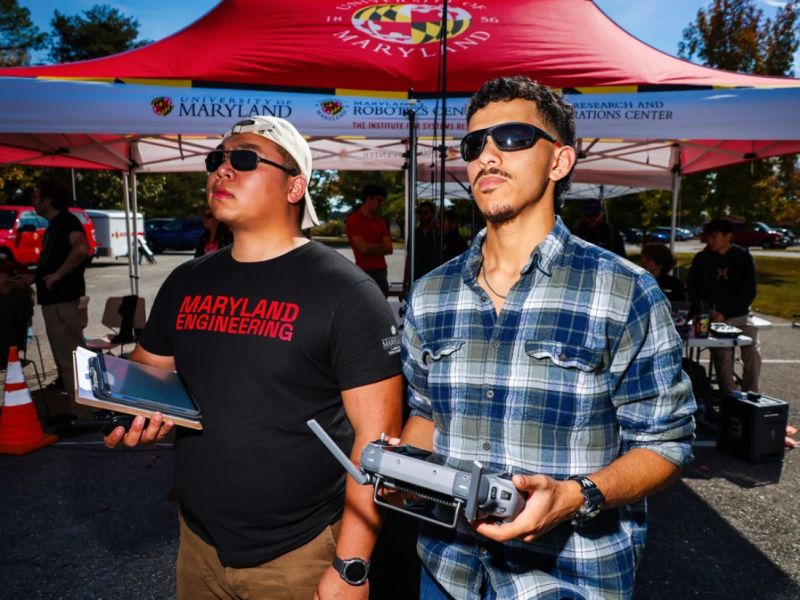
The competition put a challenge to the field: build better systems to detect and suppress wildfires before they get out of hand. Maryland's Fire Protection Engineering program answered it with Crossfire, a team of faculty, staff, and students building an AI-powered firefighting drone.
They were driving out to La Plata to test hardware in open air. Local news covered them. So did IEEE Spectrum.
That's what Yaseen walked into. Not a blank page, but a working problem with people already on it and room for one more.
Crossfire advanced to the semifinal stage of the $11 million XPRIZE Wildfire Competition, out of hundreds of international teams.
Then they stopped. No further.
What the drone couldn't do, the software could
Losing is usually where a story like this ends. This one turned instead.
Inside a firefighting drone that wasn't going to win an $11 million prize was one piece that worked unreasonably well. It could look at a landscape and tell the difference between a wildfire and a controlled burn.
That distinction sounds small but it isn't. Every false alarm costs a response, and a detection system that can't tell a hazard from a scheduled agricultural burn generates enough of them to be worse than useless. Crossfire's could, at better than 95 percent accuracy.
"Our experience in that competition showed us that what we built wasn't just a competition project," Yaseen said. "It was something with real potential in the field."
Norden Labs
Working with a faculty advisor, Yaseen and the team turned that piece into a company.
Norden Labs builds vision AI that runs on the device itself rather than in the cloud, which matters when the device is somewhere with no connection. The wildfire model they started with is now called Ember, and their own site describes it as born from XPRIZE Wildfire.
Ember is one of three model families. The same underlying engine that learned to tell a wildfire from a controlled burn turned out to generalize, and the other two point at defense systems and radar imaging. The problem Yaseen joined to solve is now a third of what his company does.
Where he landed
Yaseen graduated from the University of Maryland in May 2026 with a degree in aerospace engineering. That much was always the plan, but the rest of it wasn't. He arrived to study aircraft and left with the degree and a company, and the thing that made the company possible was a competition his team didn't win.
Yaseen Taha's family had come a long way to see him. They didn't get the visit they planned.
"All we see is red skies and smoke so thick that you can't really see ahead," he said. "That special family visit had to be cut short."
He's an international student at the University of Maryland, so he doesn't see his family often. A wildfire hundreds of miles away took days off the time he had with them. That's a strange and specific way to learn that a global problem is also a personal one.
He joined xFoundry's team for the XPRIZE Wildfire Competition with no solution of his own.
Team Crossfire
The competition put a challenge to the field: build better systems to detect and suppress wildfires before they get out of hand. Maryland's Fire Protection Engineering program answered it with Crossfire, a team of faculty, staff, and students building an AI-powered firefighting drone.
They were driving out to La Plata to test hardware in open air. Local news covered them. So did IEEE Spectrum.
That's what Yaseen walked into. Not a blank page, but a working problem with people already on it and room for one more.
Crossfire advanced to the semifinal stage of the $11 million XPRIZE Wildfire Competition, out of hundreds of international teams.
Then they stopped. No further.
What the drone couldn't do, the software could
Losing is usually where a story like this ends. This one turned instead.
Inside a firefighting drone that wasn't going to win an $11 million prize was one piece that worked unreasonably well. It could look at a landscape and tell the difference between a wildfire and a controlled burn.
That distinction sounds small but it isn't. Every false alarm costs a response, and a detection system that can't tell a hazard from a scheduled agricultural burn generates enough of them to be worse than useless. Crossfire's could, at better than 95 percent accuracy.
"Our experience in that competition showed us that what we built wasn't just a competition project," Yaseen said. "It was something with real potential in the field."
Norden Labs
Working with a faculty advisor, Yaseen and the team turned that piece into a company.
Norden Labs builds vision AI that runs on the device itself rather than in the cloud, which matters when the device is somewhere with no connection. The wildfire model they started with is now called Ember, and their own site describes it as born from XPRIZE Wildfire.
Ember is one of three model families. The same underlying engine that learned to tell a wildfire from a controlled burn turned out to generalize, and the other two point at defense systems and radar imaging. The problem Yaseen joined to solve is now a third of what his company does.
Where he landed
Yaseen graduated from the University of Maryland in May 2026 with a degree in aerospace engineering. That much was always the plan, but the rest of it wasn't. He arrived to study aircraft and left with the degree and a company, and the thing that made the company possible was a competition his team didn't win.