read
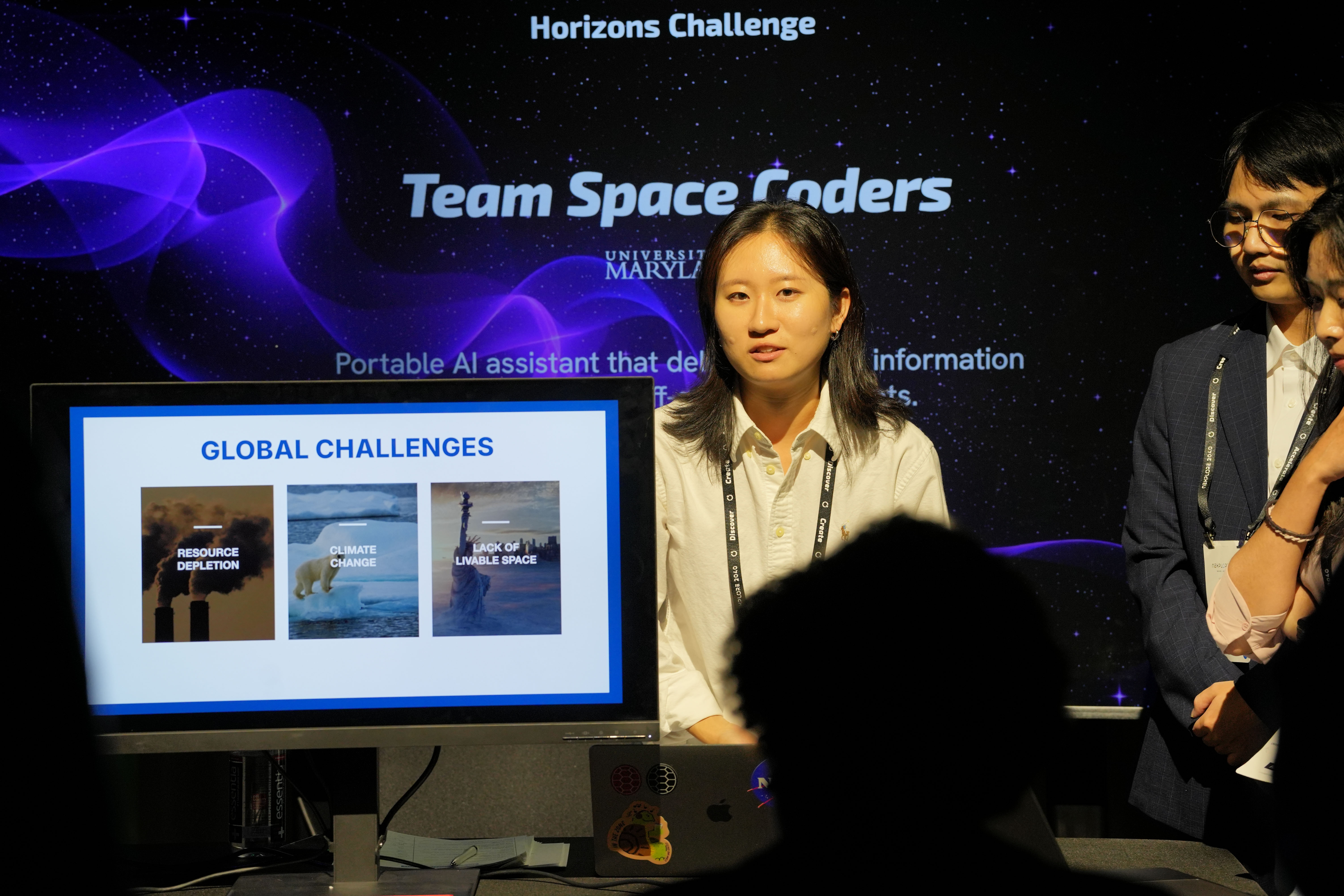
Team Space Coders
Competition:
Year:
University:
Topic:
Competition name
2025
University of Maryland, College Park
Portable Off-grid AI
Reasoning that survives where the grid doesn't
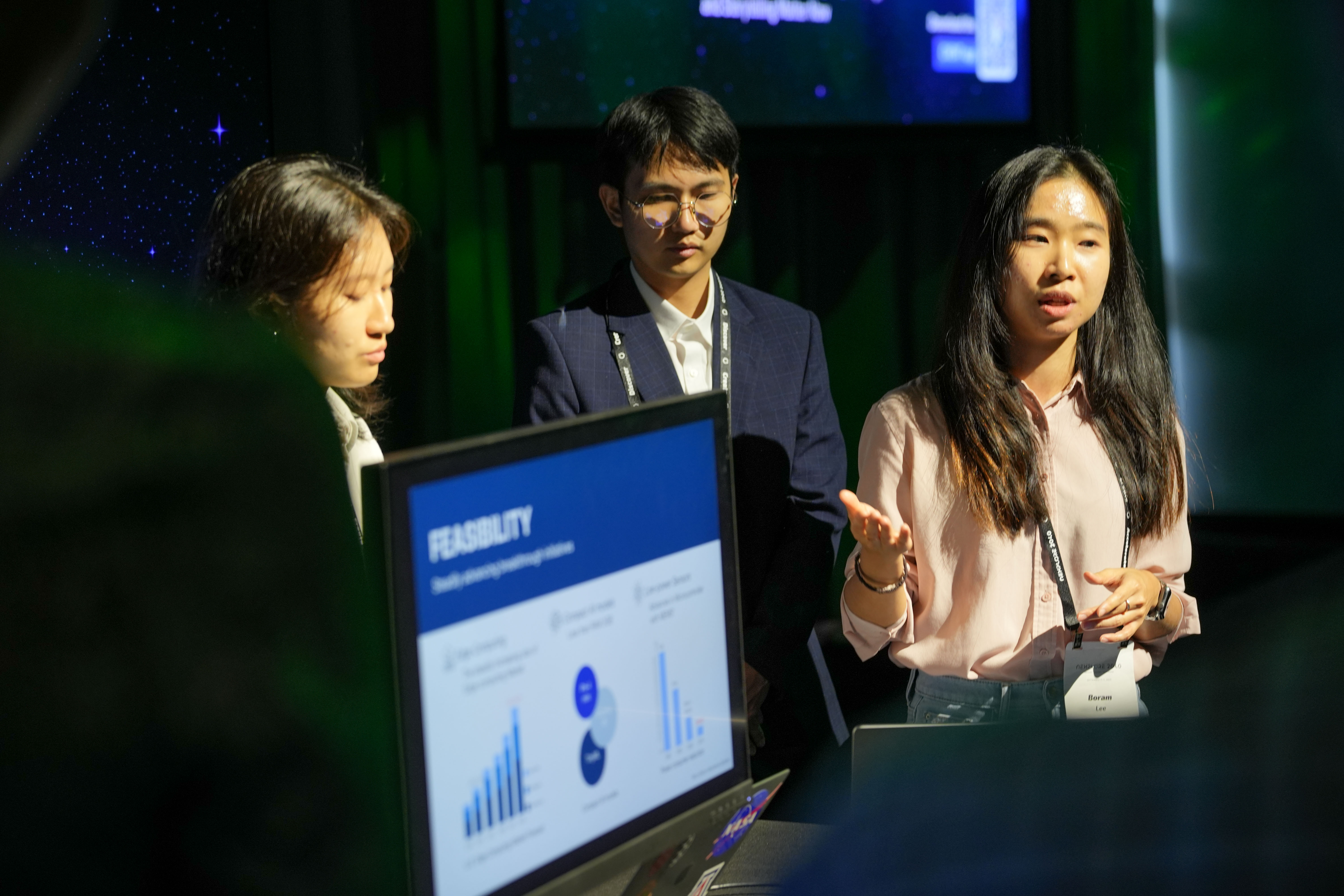
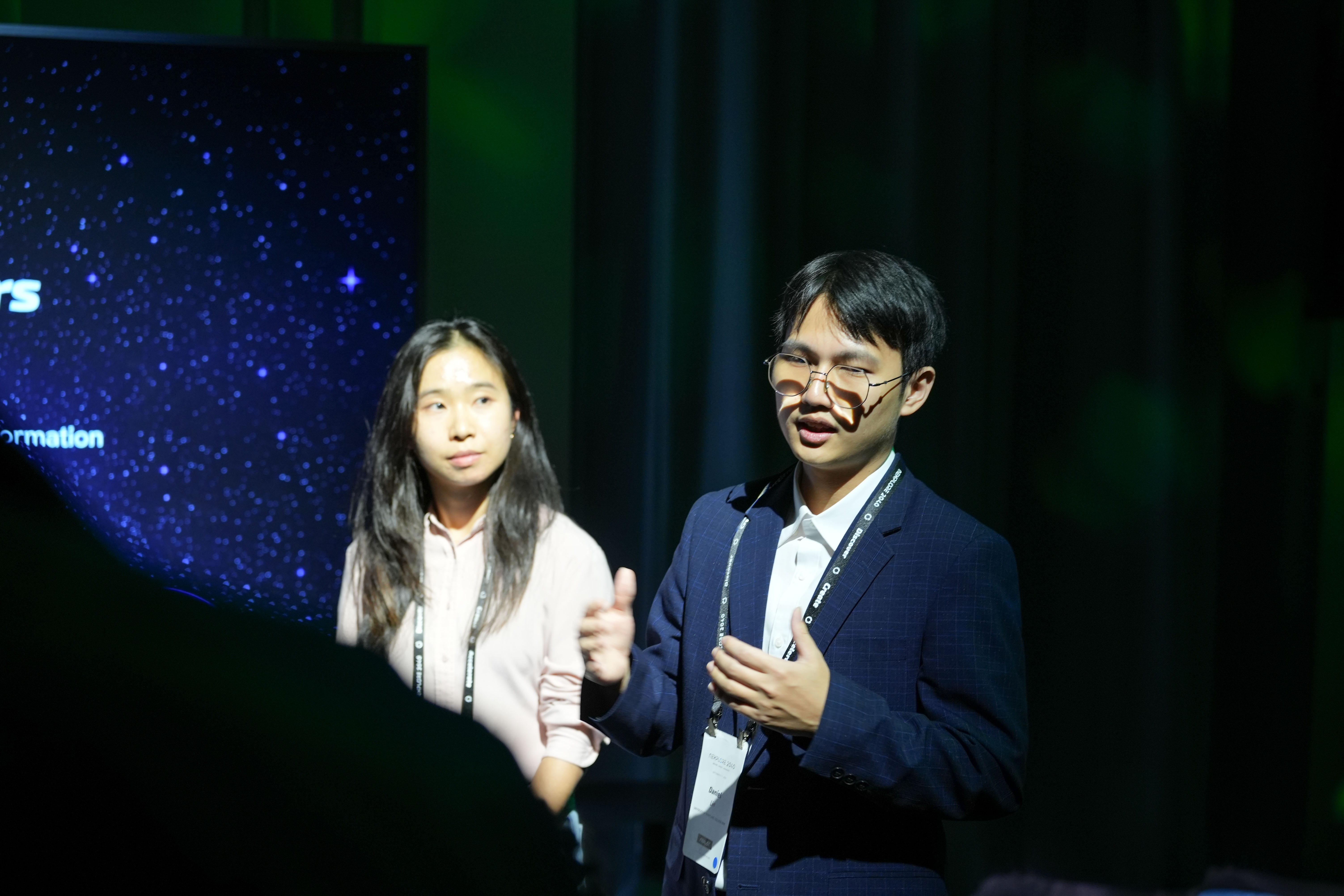
Space Coder defined the problem of how humans can safely operate in off-grid, extreme environments, from remote terrestrial regions to future lunar habitats, where no infrastructure exists to support real-time decision-making. The team framed the need for a context-reasoning AI assistant that monitors resources, interprets risks, and understands its environment entirely on-device. They argued this problem is both urgent and newly solvable, riding the convergence of edge computing, compact AI models, and ultra-low-power sensors toward NASA's 2040 vision.
Impact
$46.2B
The enabling market is exploding. The U.S. edge computing market is projected to grow ~6.4× in a decade, signaling that the on-device computer this problem depends on is arriving fast. The problem is becoming solvable now.
~100 megawatts
Sensing is now cheap enough to deploy off-grid. Low-power sensor consumption has fallen by orders of magnitude since the 1980s tube era. Continuous environmental monitoring no longer requires grid power, opening the unexplored regions the problem targets.
NASA 2040 lunar-habitat horizon
The problem scales from Earth to space. Off-grid, self-learning AI maps directly onto building permanent lunar habitats that function without Earth support. A single problem definition spans terrestrial extreme environments and space exploration.

What's next?
Team Space Coders has moved on to become members of xFoundry’s Mental Health Xperience as Team BetterTogether. They are working on creating a solution that helps students form meaningful friendships through small peer groups, shared interests, and recurring social activities.
Members
Hear directly from the students who built, tested, and launched real-world solutions through the program.
No items found.