read
Climate
Infrastructure
Society
Health
Automated Asset Inspection
Your mission:
Create a challenge that would drive the development of autonomous robotic inspection systems. These systems should identify and locate faults across infrastructure, industrial assets, and facilities using computer vision, AI, and coordinated ground and air robots.
Focus on defining the problem, not solving it. The solution topic you create will be the focus of student innovation efforts in the next 18 months.
The Ultimate Destination:
Advancing Human Presence Beyond Earth
Understanding why this matters helps you see the bigger picture and focus your topic on challenges that align with NASA’s mission.
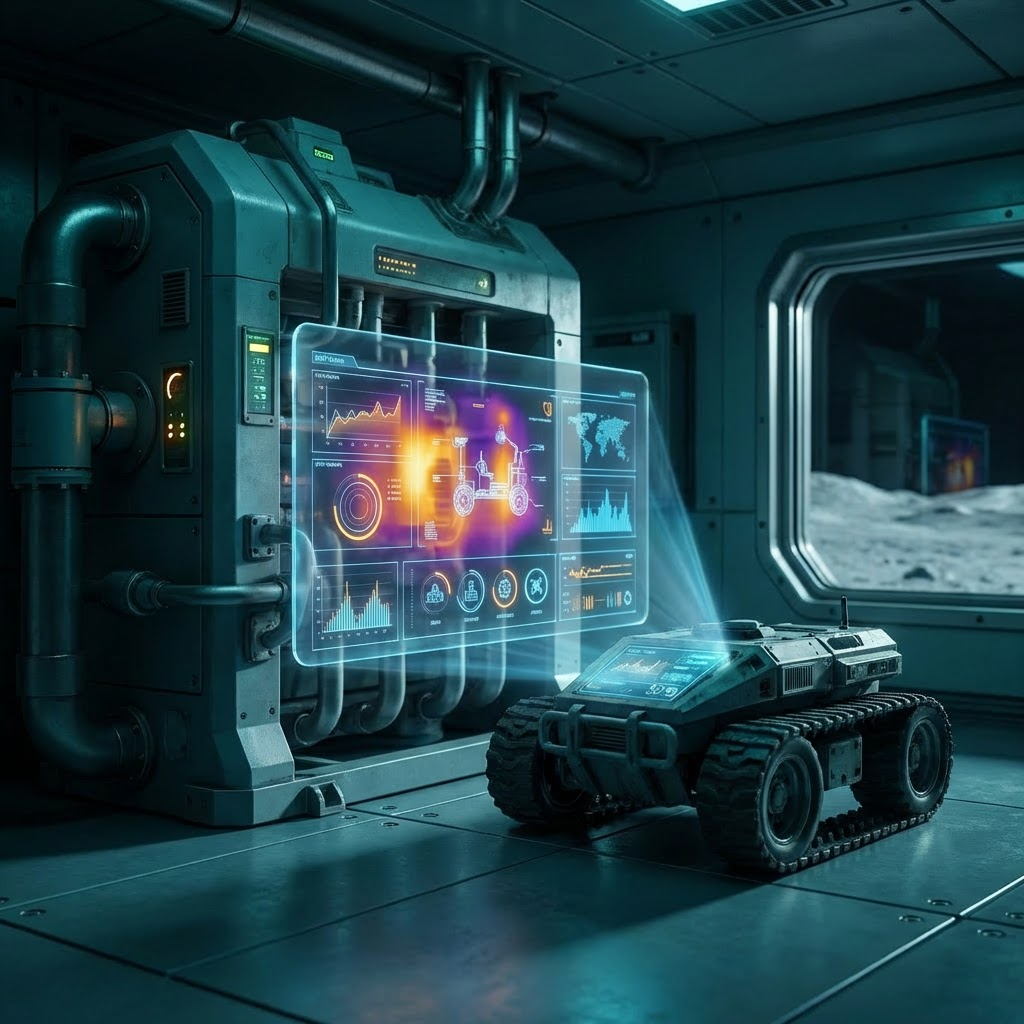
By 2040, NASA plans to establish Artemis Base Camp at the lunar south pole. This complex settlement will include habitats, life support systems, power networks, communication arrays, resource extraction facilities, scientific instruments, rovers, and robotic systems spanning several square kilometers. The challenge is fundamental: maintaining diverse critical infrastructure across vast areas with minimal crew availability and communication delays that prohibit real-time Earth-based monitoring.
A single failure in any system could cascade into mission-critical emergencies. Yet astronauts cannot physically inspect every asset daily while managing science operations, exploration, and facility maintenance. Manual inspections require excessive spacewalk time, exposing astronauts to radiation and micrometeorite risks. The lunar environment amplifies these challenges with extreme temperature swings, abrasive dust, unpredictable micrometeorite impacts, and material-degrading solar radiation.
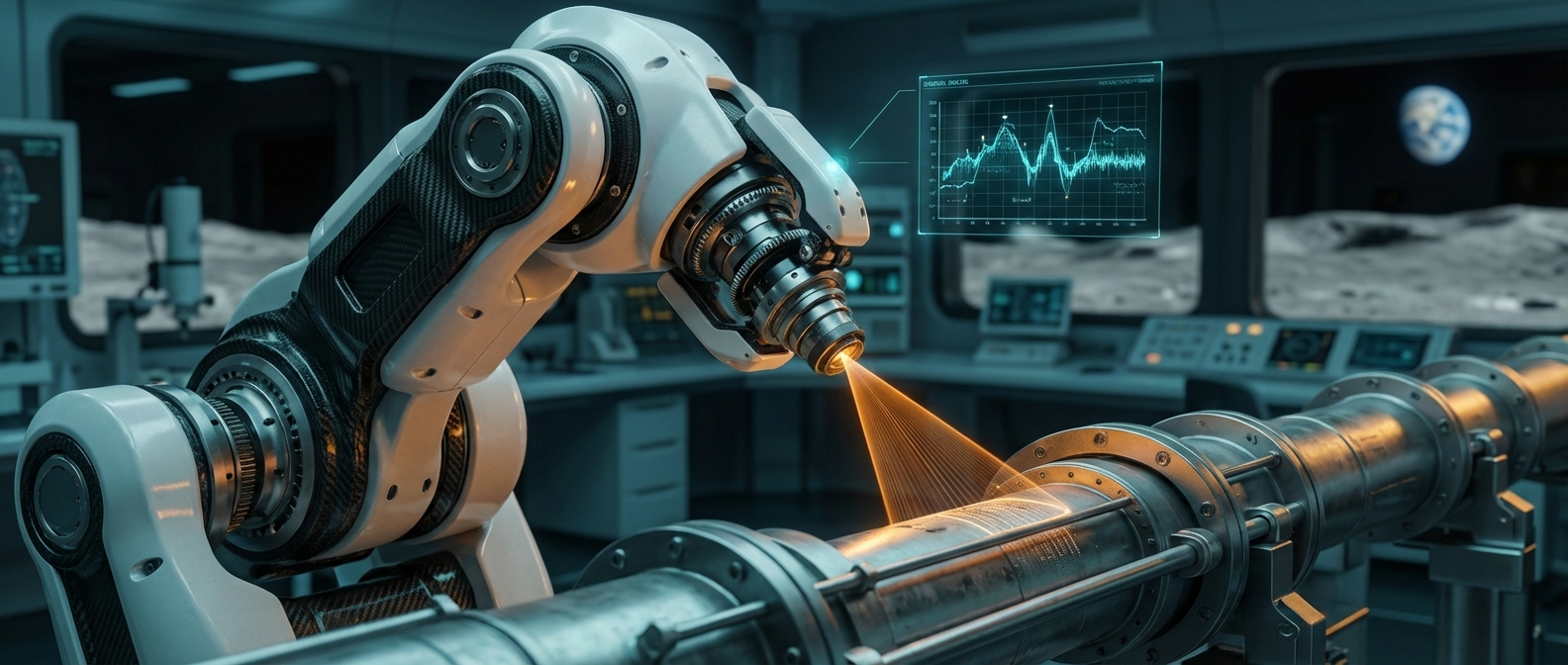
Autonomous robotic inspection systems offer the solution NASA needs. Mobile robots equipped with computer vision and AI would autonomously patrol facilities, monitoring everything from habitat exteriors to equipment to storage systems. These systems must identify problems ranging from structural cracks to equipment misalignment to surface contamination, all while operating independently for weeks or months. When ground rovers encounter tall structures or inaccessible locations, they coordinate with aerial drones and climbing robots for complete coverage.
The need becomes critical when considering Mars missions lasting 500+ days with 20-minute communication delays each way. Autonomous inspection robots must identify problems, locate them precisely to guide repairs, predict failure progression, and independently decide which issues need immediate crew attention versus scheduled maintenance.
NASA's path forward is deliberate. Lunar operations provide the testing ground where short communication delays enable Earth oversight during initial deployment while pushing systems toward autonomy. Success on the Moon validates technologies for Mars, where complete autonomous operation becomes mandatory.
The Flight Plan:
Core Requirements for Mission Success
These six core requirements highlight the foundational capabilities your solution topic should address.

Computer Vision for Anomaly Detection Across Diverse Failure Modes
Develop visual inspection algorithms that reliably identify multiple fault types (cracks, corrosion, hot spots, loose connections, physical damage) across varying lighting conditions and viewing angles using real-time image analysis.
01
Cooperative Ground-Air Coordination Protocols
Establish frameworks that enable different robot types (ground rovers, aerial drones, climbing robots) to autonomously coordinate inspection coverage, share sensor data, and optimize mission plans based on detected problems and energy constraints.
03
Actionable Reporting with Precise Geolocation
Generate inspection outputs that specify exact fault locations (sub-meter accuracy) to enable efficient repairs, including coordinates, visual documentation, and severity classifications that translate directly into maintenance work orders.
05
Edge AI for On-Device Fault Localization
Implement machine learning models that run directly on robotic platforms with limited computing power, enabling autonomous fault detection during patrols without requiring continuous data transmission to remote servers or cloud connectivity.
02
Predictive Maintenance Through Temporal Analysis
Create systems that track asset condition changes over time, identifying degradation trends before failures occur by comparing inspection data to detect subtle changes and prioritize interventions based on predicted failure timing.
04
Environmental Robustness and Multi-Spectral Sensing
Operate reliably across extreme conditions (temperature variations, dust, moisture, high winds) while integrating multiple sensing types (visible light, thermal infrared, ultraviolet, LiDAR) to detect faults invisible to standard cameras.
06
Computer Vision for Anomaly Detection Across Diverse Failure Modes
Develop visual inspection algorithms that reliably identify multiple fault types (cracks, corrosion, hot spots, loose connections, physical damage) across varying lighting conditions and viewing angles using real-time image analysis.
01
Edge AI for On-Device Fault Localization
Implement machine learning models that run directly on robotic platforms with limited computing power, enabling autonomous fault detection during patrols without requiring continuous data transmission to remote servers or cloud connectivity.
02
Cooperative Ground-Air Coordination Protocols
Establish frameworks that enable different robot types (ground rovers, aerial drones, climbing robots) to autonomously coordinate inspection coverage, share sensor data, and optimize mission plans based on detected problems and energy constraints.
03
Predictive Maintenance Through Temporal Analysis
Create systems that track asset condition changes over time, identifying degradation trends before failures occur by comparing inspection data to detect subtle changes and prioritize interventions based on predicted failure timing.
04
Actionable Reporting with Precise Geolocation
Generate inspection outputs that specify exact fault locations (sub-meter accuracy) to enable efficient repairs, including coordinates, visual documentation, and severity classifications that translate directly into maintenance work orders.
05
Environmental Robustness and Multi-Spectral Sensing
Operate reliably across extreme conditions (temperature variations, dust, moisture, high winds) while integrating multiple sensing types (visible light, thermal infrared, ultraviolet, LiDAR) to detect faults invisible to standard cameras.
06
Ground-Level Relevance:
Driving Change for Earth, First
How does your topic create meaningful change? The most compelling solution topics bridge the needs of Earth and the demands of space, offering scalable, impactful answers to humanity's biggest challenges. Before diving into feasibility, consider how your topic can shape the world today while paving the way for tomorrow.
Can it scale?
- Could this topic’s impact extend across different Earth regions or populations?
- Does it address universal needs or challenges that apply broadly?
Does it solve a major problem?
- Does your topic address a significant barrier to space exploration or human survival?
- Can it simultaneously solve pressing challenges on Earth, like resource scarcity or climate change?
Can it adapt?
- Is your topic flexible enough to work in diverse environments on Earth and eventually on Mars?
- Could it be modified or enhanced as technology evolves?
Will it inspire future work?
- Does your topic create a foundation for further innovation?
- Could it lead to spinoff technologies or applications?

The Feasibility Factor:
Turning Ideas Into Action
Is your topic realistic? Even the most transformative ideas need to be grounded in feasibility. This is about asking the practical questions. Great solution topics are ambitious but achievable within a defined scope.
Can measurable progress be made within 18 months?
Does it rely on existing tools and technology, or those likely available by 2027?
Is your topic specific, focused, and actionable?
Is it practical within budget, manpower, and material constraints?
Can it be scaled for use across regions or contexts?
Does it address a real-world problem with the potential for meaningful impact?
Potential markets
On Earth, AI-driven inspection robotics address massive infrastructure challenges where manual methods cannot scale. These applications generate immediate commercial value while proving the autonomous operation capabilities NASA requires.
1. Energy and Utilities Infrastructure Monitoring
- Market: The combined global market for energy infrastructure monitoring exceeds $100 billion annually, with solar operations and maintenance growing from $15.8 billion in 2023 to $35 billion by 2030, wind maintenance growing from $22.1 billion to $38.5 billion, plus $45 billion in power transmission inspection services.
- Challenge: Energy infrastructure faces critical inspection challenges. Utility-scale renewable installations span hundreds of acres with equipment requiring regular fault detection. A 100-megawatt solar farm contains over 300,000 panels requiring weeks of manual survey. Wind turbines stand 80-120 meters tall, exposing technicians to fatal fall risks. Transmission lines span over 700,000 miles in North America alone. Automated thermal drone surveys operate 10-20x faster than manual methods while detecting subsurface faults invisible to visual inspection.
- NASA Link: Lunar infrastructure will deploy distributed solar arrays, power transmission lines, and energy storage across multiple facilities. The same computer vision algorithms that identify terrestrial solar panel defects and thermal anomalies apply directly to lunar installations, while edge AI requirements naturally satisfy NASA's autonomous operation needs.
2. Warehouse and Logistics Operations
- Market: The global warehouse automation market reached $27.4 billion in 2023, projected to grow to $51.9 billion by 2028. The logistics market exceeded $340 billion globally. Amazon alone operates over 1,000 fulfillment centers globally.
- Challenge: Modern warehouses spanning millions of square feet operate 24/7 with inventory continuously moving. Racking systems storing products up to 40 feet high require specialized equipment for inspection, creating safety risks. Inventory accuracy averages only 63% in typical warehouses, with misplaced items costing retailers $1.75 trillion annually. Forklift impacts damage racking structures, creating collapse risks that injure workers and destroy inventory.
- NASA Link: Lunar facilities will contain equipment storage, supply inventories, and resource stockpiles. Maintaining accurate inventory knowledge where items can shift, detecting structural damage to storage systems, and monitoring stored materials requires autonomous inspection capability. The same algorithms that track warehouse inventory translate directly to lunar facility management.
3. Manufacturing and Industrial Asset Monitoring
- Market: The global industrial inspection market reached $12.8 billion in 2023, growing to $22.1 billion by 2030. Unplanned downtime costs manufacturers an average of $260,000 per hour for automotive production and over $1 million per hour for semiconductor facilities.
- Challenge: Manufacturing operations face relentless pressure to maximize uptime and maintain quality. Traditional inspection relies on periodic shutdowns for human access, causing production losses. Computer vision systems monitoring production lines identify defects and equipment anomalies in real-time. Automated visual inspection systems detect product defects at over 99% accuracy while operating at production line speeds impossible for human inspectors.
- NASA Link: Lunar manufacturing and resource utilization facilities will process materials and manufacture replacement parts. Equipment operating in vacuum and extreme thermal environments requires regular inspection for wear and process anomalies. Automated inspection robots conducting routine surveys apply technologies proven in terrestrial manufacturing.
4. Transportation Infrastructure Assessment
- Market: The global bridge inspection market is valued at $4.2 billion annually, with broader transportation infrastructure monitoring exceeding $25 billion. The United States has over 617,000 bridges, with 42% more than 50 years old and 46,000+ classified as structurally deficient.
- Challenge: Manual bridge inspection requires specialized access equipment costing $5,000-15,000 per bridge while exposing inspectors to traffic risks and fall hazards. Inspector shortages mean qualified professionals cannot meet demand. The 2007 I-35W bridge collapse killing 13 people demonstrated catastrophic consequences of inadequate inspection.
- NASA Link: Lunar surface transportation infrastructure will include landing pads, vehicle roads, airlocks, and pressurized tunnels. These structures face thermal cycling, micrometeorite impacts, and mechanical loads. Autonomous inspection robots surveying infrastructure for cracks and structural deformation apply the same algorithms developed for terrestrial bridge assessment.
5. Commercial Real Estate and Facility Management
- Market: The global facility management market reached $1.26 trillion in 2023, projected to grow to $1.84 trillion by 2030. Building inspection services represent $45+ billion annually. Commercial real estate globally is valued at over $33 trillion.
- Challenge: Commercial buildings require assessment for structural integrity, water infiltration, and life safety hazards. Traditional inspection requires scaffolding or rope access at costs of $15,000-100,000 per building, disrupting tenants and limiting inspection frequency. Facade failures can cause injuries and regulatory penalties. Thermal drone surveys reveal insulation deficiencies and moisture intrusion before visible interior damage appears.
- NASA Link: Lunar habitats represent sealed pressurized environments where envelope failures are catastrophic. Autonomous robots conducting regular interior and exterior facility surveys, monitoring environmental conditions, and detecting degradation apply technologies developed for terrestrial building management.
6. Space Infrastructure and Mission-Critical Systems
- Market: The global space industry exceeded $469 billion in 2023, growing toward $1 trillion by 2040. NASA's Artemis program investment exceeds $93 billion through 2025, with sustained lunar operations requiring comprehensive infrastructure monitoring.
- Challenge: The International Space Station requires exterior surveys for micrometeorite damage, thermal blanket degradation, and structural integrity. Current methods rely on astronaut spacewalks costing over $500,000 per spacewalk. Artemis Base Camp will deploy multiple systems across several square kilometers, each facing micrometeorite bombardment, extreme thermal cycling, and abrasive dust.
- NASA Link: This is the direct application. Space-rated inspection robots conduct autonomous facility surveys during crew rest periods. Multi-spectral cameras detect impact damage, seal degradation, and thermal blanket failures. Rovers patrol between solar arrays, antennas, and equipment, capturing detailed condition imagery. Edge AI identifies fault patterns requiring crew attention.